



Together, We’re Bringing Rhinos Home
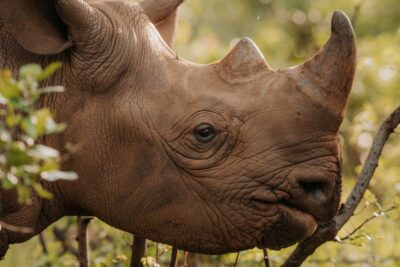
 As we look ahead to next year, three eastern black rhinos, Mizi, Kisima, and Chanua, will return to their ancestral homeland in East Africa when they arrive in northwestern Tanzania’s Ikorongo-Grumeti Game Reserve (IGGR). This moment is the culmination of years of investment, belief, and commitment. It’s the living proof that with focus, funding, and heart, we can bring one of the world’s most endangered mammals back from the brink and restore it to the wild landscapes it once ruled.
The eastern black rhino (Diceros bicornis michaeli) once roamed widely across East Africa, from South Sudan to northern Tanzania. As a keystone species, their presence helps shape the very character of the savannah: by browsing on woody shrubs and trees, they prevent overgrowth and allow grasses to flourish, supporting a rich diversity of herbivores, birds, and pollinators. Yet despite their ecological importance, these extraordinary animals became the target of relentless poaching in the 20th century. Between 1970 and the early 1990s, black rhino numbers crashed by an estimated 96%, from 65,000 to just 2,300 due to the global black-market demand for rhino horn.
In 2007, the Ministry of Natural Resources and Tourism (MNRT), the Tanzania Wildlife Management Authority (TAWA), andthe Grumeti Fund launched the Black Rhino Re-establishment Project, refusing to let extinction be the end of this story. Backed by intensive ecological research, international collaboration, and state-of-the-art technology, the rhino project aims to re-establish a self-sustaining population of eastern black rhinos in their native Serengeti range. Since its inception, rhinos have been sourced from both wild populations and carefully managed captive breeding programmes, each one selected to strengthen genetic diversity and reintroduce behavioural resilience to the landscape.
Mizi, Kisima, and Chanua will be the latest to join this mission. Bred and raised under human care by The Aspinall Foundation and Port Lympne Safari Park in the United Kingdom, these three females have spent over seven years undergoing health assessments and behavioural conditioning to prepare them for the journey and a life in the wild including exposure to natural vegetation, predator awareness, minimal human contact, and veterinary oversight.
They are not just numbers in a conservation ledger. They are individuals, intelligent, strong-willed, and surprisingly social. Black rhinos may be solitary in the wild, but they form deep bonds in captivity and often develop preferences for certain companions. They are highly territorial, yet deeply sensitive: capable of charging at 50 km/h, but also known to spend hours rubbing against termite mounds or resting under the shade of acacia trees. Seeing a rhino is to witness a living relic of the Miocene, a prehistoric powerhouse that predates even the Ice Age.
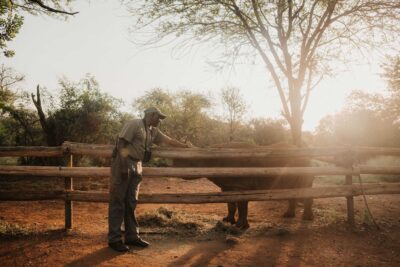
Their journey from the UK to Tanzania will be executed with precision with a strong team, ready to take on the challenge. Mizi, Kisima, and Chanua will travel alert and standing, carefully monitored throughout the trip and comforted by their trusted keeper, Paul, who has known them since birth. In fact, he witnessed Chanua being born. Upon arrival, they’ll spend time acclimating in secure enclosures where they can be monitored closely before being released through a “soft-release” protocol into their new home, the first step toward full reintegration into the ecosystem. This is a process that will take years.
Reintroducing rhinos is a monumental effort that demands long-term vision and resources. From the air to the ground, every aspect of their safety has been accounted for:
- Anti-Poaching Surveillance: A multi-layered system of aerial patrols, AI camera traps, real-time LoRa tracking gear tags, VHF tracking horn implants, , trained rangers, canine units, and night-vision technology provides constant protection from human threats.
- Habitat Management: Roads, water points, and fencing are maintained to ensure rhinos thrive while minimising human-wildlife conflict.
- Veterinary and Ecological Monitoring: Once released, Mizi, Kisima, and Chanua will be tracked and monitored closely by expert teams, who gather data on movement, diet, health, and social behaviour.
- Genetic Planning: Ensuring diversity within the IGGR’s rhino population is critical, recruiting individuals with future breeding in mind, laying the foundation for long-term evolutionary strength and
These achievements are remarkable, but they are not without cost. The outstanding funding needed to sustain the Black Rhino Project exceeds $4.5 million, covering rhino acquisition, translocation, ranger salaries, equipment, aerial patrols, and monitoring technologies. To translocate just one rhino can cost upwards of $60,000, and conservation success depends on constant investment, vigilance, and scientific rigour. Given how slowly rhinos reproduce, with gestation lasting up to 16 months and calves staying with their mothers for two to four years, every individual matters. Every rhino is a generational investment in the future.
For those of you who support ACCF, this story belongs to you, too. Your generosity helps fuel the helicopters that circle above the reserve. It equips the teams who track rhinos through dust and thorns. It pays for the tracking devices, veterinary care, and research that ensures we’re not only saving a species, but building a thriving future for it. In 2023, the Grumeti Fund and the Tanzanian government signed a renewed five-year Memorandum of Understanding to continue rhino conservation efforts. The goal? A future where eastern black rhinos not only survive, but roam freely and abundantly across their historic range.