


Restoring Balance at Massingir: Community Action, Science, and the Fight Against Ghost Nets
Along the southern edge of the Great Limpopo Transfrontier Conservation Area, the waters of Massingir Dam sustain both people and wildlife in one of southern Africa’s most climate-vulnerable landscapes. For communities living around the dam, fisheries are not just a livelihood – they are a critical source of food security and resilience in a region increasingly affected by erratic rainfall and flooding.
Yet this vital resource faces a largely invisible threat: ghost nets.
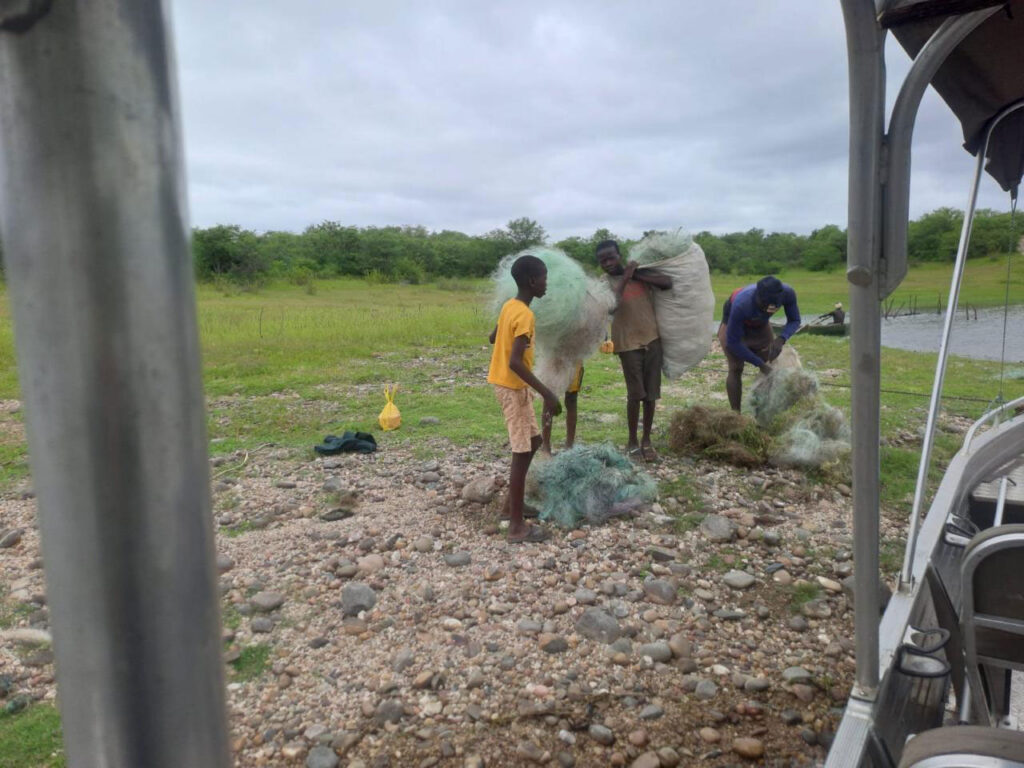
Lost or abandoned fishing nets in the dam continue to trap fish indiscriminately, degrading breeding stocks, damaging habitats, and undermining the long-term sustainability of the fishery. These silent traps not only reduce yields for local fishers but also threaten the ecological balance of the dam, with knock-on effects for biodiversity across the wider landscape.
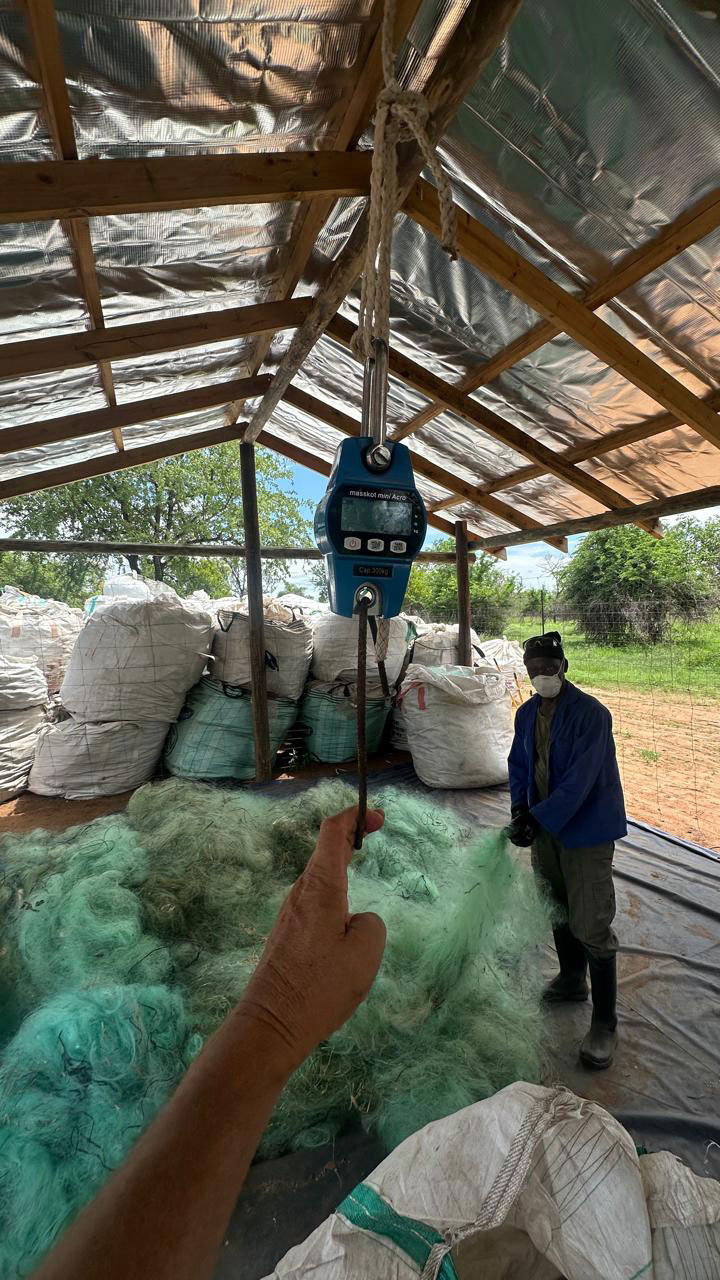
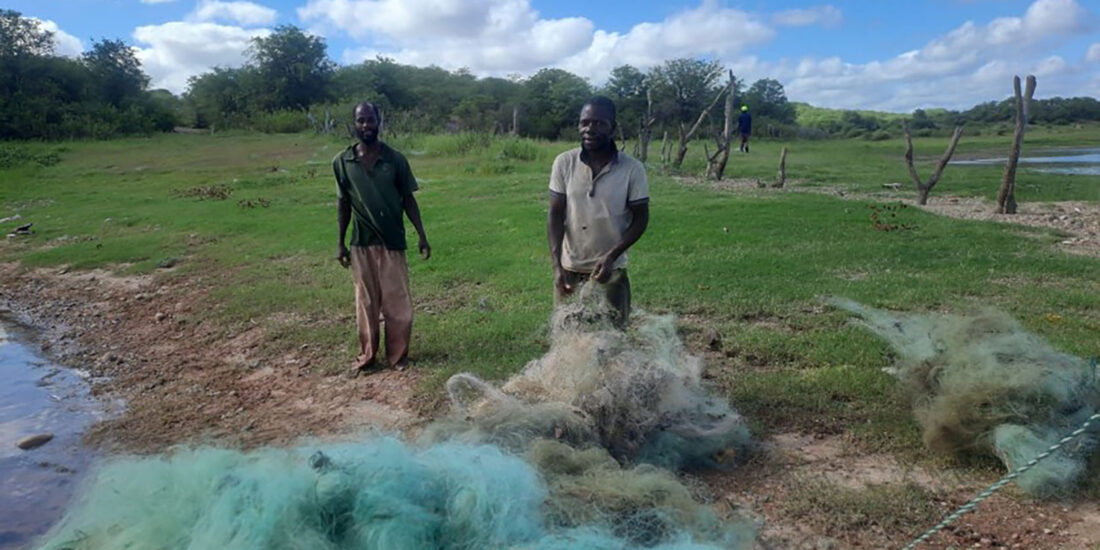
In response, Karingani Game Reserve, an ACCF project, initiated the Ghost Net Initiative – an effort that combines immediate action with long-term systems change. Working closely with local fishing communities, the programme focuses on identifying, removing, and recording ghost nets from the dam, while building awareness of their impacts.
What makes this initiative particularly powerful is its integration with a growing citizen science approach. Community members – many of whom depend directly on the fishery – are now actively contributing to data collection, logging net locations, catch impacts, and fishing patterns. This information feeds directly into a broader scientific framework, helping to build one of the most detailed, community-informed datasets ever assembled for the dam.
This work is closely aligned with a recently completed fisheries baseline study, which provides the first comprehensive assessment of fish stocks, fishing pressure, and ecological health at Massingir. Together, these efforts are laying the foundation for adaptive, evidence-based management of the fishery – ensuring that decisions are informed not only by science, but by the lived experience of those who rely on the resource every day.
The impact is already tangible. Ghost nets are being removed. Awareness is growing. Communities are increasingly engaged not just as resource users, but as stewards. And, critically, a system is emerging – one that links local action to data, and data to decision-making.
This is more than a clean-up effort. It is a model for how conservation, livelihoods, and science can come together in a single, integrated approach. By strengthening the sustainability of the Massingir fishery, we are supporting food security, reducing pressure on surrounding ecosystems, and contributing to the long-term stability of communities living at the frontline of conservation.
There is still much to be done. Expanding the initiative to cover additional landing sites, developing small businesses around net recycling, strengthening monitoring systems, and embedding co-management structures will all be essential next steps. With the right support, this model has the potential not only to transform Massingir, but to inform freshwater fisheries management across the region.
For ACCF and its partners, this work reflects a broader commitment: investing in practical, community-driven solutions that deliver measurable outcomes for both people and nature.
Your support makes this possible.
By contributing to initiatives like this, you are helping to protect critical food systems, restore ecosystems, and empower communities to lead the stewardship of their natural resources. In doing so, you are not only addressing today’s challenges – but helping to build a more resilient and sustainable future for this extraordinary landscape.