


Local Stewardship as Conservation: The Malilangwe Scouts
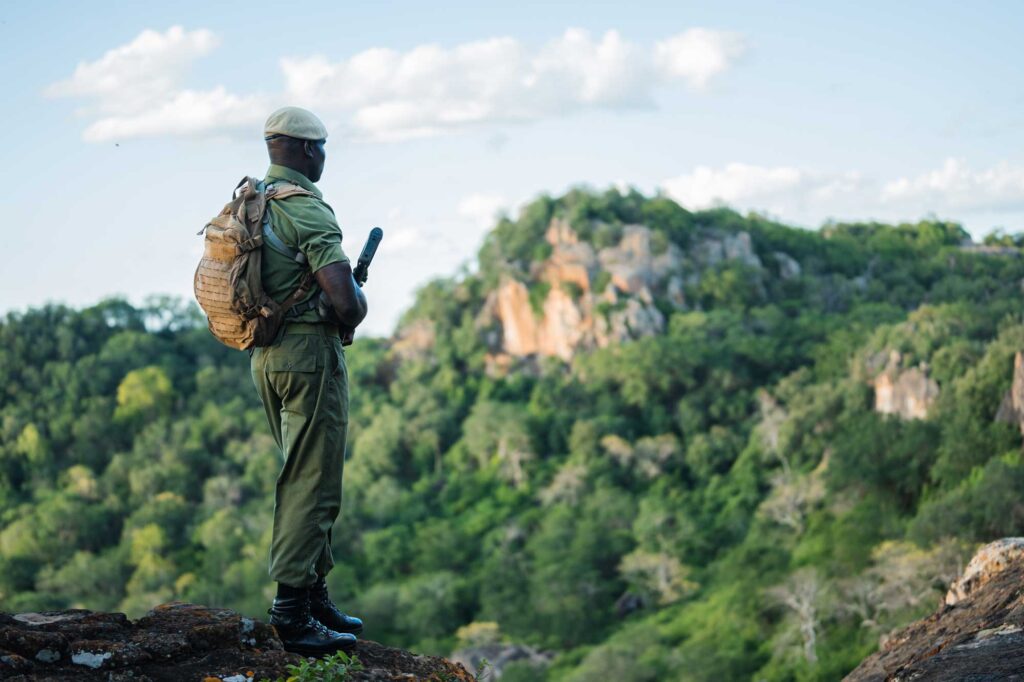
For more than two decades, the Malilangwe Scouts have exemplified a conservation model grounded in the principle that landscapes are most effectively protected by the people who inhabit, understand, and are culturally embedded within them. Their contribution extends far beyond enforcement; it represents a theory of conservation in which ecological guardianship arises from local knowledge systems, social legitimacy, and a shared sense of custodianship over land and wildlife.
Community-Embedded Conservation
Unlike conventional security force conservation units, the Malilangwe Scouts are recruited primarily from the communities surrounding the reserve. This localisation is not incidental, it is the foundation of their effectiveness. By living in proximity to the ecosystems they safeguard, Scouts operate not as external agents but as stewards whose authority derives from both cultural belonging and ecological familiarity.
This approach challenges historical models of exclusionary conservation, positioning local residents not as peripheral stakeholders but as central actors whose knowledge and presence shape long-term ecological outcomes.
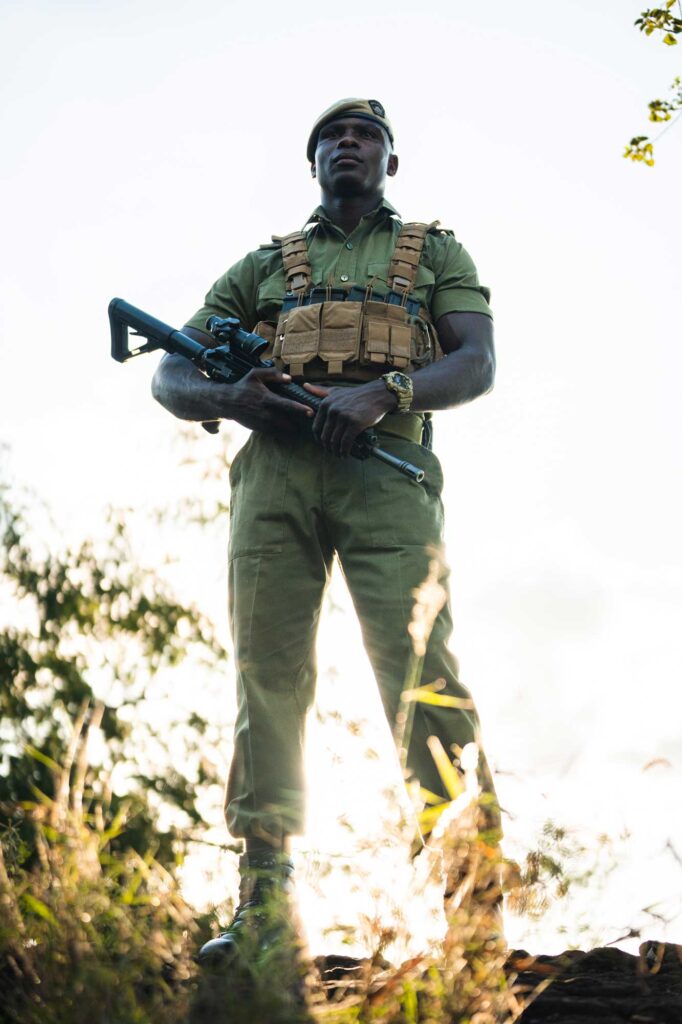
Recruits undergo six months of rigorous training that integrates:
- anti-poaching tactics
- tracking and bushcraft
- flora and fauna identification
- first aid and emergency response
- firearms and weapons handling
- navigation, endurance, and survival competencies
Alongside these technical skills, the training reinforces values that underpin ethical, community-aligned conservation practice: integrity, discipline, restraint, and respect for both wildlife and people.
Local Knowledge and the Intelligence Ecology of Anti-Poaching
Poaching dynamics in southern Africa are deeply entangled with economic pressures, organised criminal networks, and shifting human–wildlife interactions. In such contexts, local legitimacy and knowledge form a critical advantage.
The Malilangwe Scouts’ effectiveness rests on three interconnected pillars:
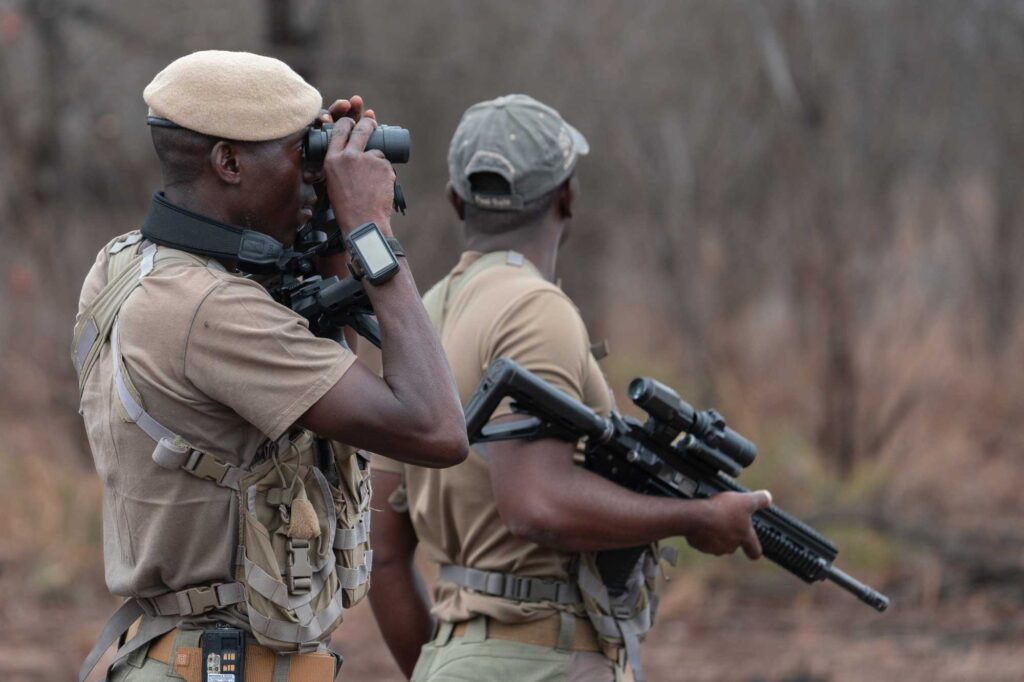
- Knowledge-led deployment: Patrol patterns are informed by intimate understanding of terrain, seasonality, and spatial poaching patterns.
- Community-derived intelligence: Because Scouts are drawn from local communities, they operate within existing information networks and social landscapes, generating insights unavailable to externally recruited forces.
- Integrated ecological monitoring: Daily patrols collect environmental data that feed into scientific research and adaptive management.
Together, these elements demonstrate how conservation outcomes improve when local actors are positioned as knowledge producers rather than passive beneficiaries.
Bushcraft as Cultural and Ecological Heritage
One of the most distinctive dimensions of the Scouts’ expertise is their mastery of bushcraft, knowledge that is simultaneously operational, cultural, and intergenerational. Skills such as interpreting tracks, reading subtle ecological cues, locating water during drought, or identifying medicinal plants are rooted in long-standing relationships between people and the Lowveld landscape.
Stewardship Beyond Reserve Boundaries
The Scouts’ responsibilities extend into neighbouring communities, where they contribute to:
mitigating human–wildlife conflict:
- responding to wildlife incursions and emergencies
- supporting community safety
- participating in local education and youth development initiatives
Through these interactions, the Scouts reinforce a relational model of conservation: one in which ecological well-being and community well-being are mutually reinforcing rather than competing priorities.
To serve as a Malilangwe Scout is to undertake a vocation defined by endurance, sacrifice, and a profound sense of responsibility. Patrols frequently require nights spent in the bush, unpredictable conditions, and emotional resilience. The Scouts are simultaneously conservation practitioners, family members, and community role models.
Supporting them is therefore not only an operational necessity but an ethical imperative, ensuring that those who assume the risks of safeguarding biodiversity receive adequate training, equipment, welfare support, and infrastructure.
The Future of Conservation
The Malilangwe model illustrates the broader theoretical argument that conservation grounded in local stewardship yields stronger ecological and social outcomes. The Malilangwe Scouts’ work contributes to:
- reducing poaching pressure on threatened species
- maintaining ecological balance
- generating long-term scientific data
- fostering trust between conservation authorities and communities
- cultivating youth leadership and intergenerational stewardship
The evidence underscores a central proposition: community-rooted conservation units are indispensable for sustainable and socially legitimate environmental governance.
Although their work is often quiet and largely unseen, the Malilangwe Scouts protect an entire ecosystem and uphold a conservation philosophy centred on shared responsibility. High-impact donor support can strengthen this model by contributing to:
- advanced and continuous training
- field equipment and communications technology
- ranger housing and welfare support
- specialised teams for tracking, rapid response, and ecological monitoring
Investing in the Malilangwe Scouts is, in essence, investing in a theory of conservation that recognises the land as a lived, social, and ecological space, one best protected by the people who call it home.