Title Image

Grumeti Fund

Overview

Grumeti protects a critical section of the Serengeti ecosystem, securing the western corridor of one of the world’s last great wildlife migrations. This project plays a vital role in maintaining ecological connectivity and supporting globally significant wildlife populations.

Through sustained long-term investment, Grumeti has transformed a previously degraded system into a thriving conservation model – where ecosystems are functioning, wildlife populations are recovering, and communities benefit from sustainable economic opportunities.

Philanthropic support through ACCF strengthens conservation management, expands community programmes, and sustains one of Africa’s most important ecosystems.

Why It Matters

Protecting this corridor safeguards one of the world’s last great wildlife migrations while demonstrating a scalable model for long-term conservation and sustainable funding.

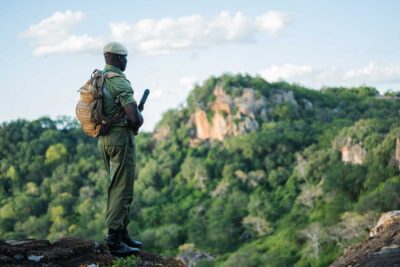
Grumeti Rangers keeping watch for poachers

Flagship Initiatives

1. Ecosystem Protection & Wildlife Recovery

Protecting migration routes through restoration, rangers, and recovery

Grumeti protects a critical section of the western Serengeti, safeguarding wildlife migration routes through integrated ecosystem management, specialist ranger operations, and science-led restoration.

Wildlife protection is delivered through a 24/7 Anti-Poaching Unit, combining ranger patrols, intelligence networks, rapid-response teams, specialist canine operations, and advanced monitoring systems to secure one of the world’s most important wildlife corridors. In 2025 alone, Grumeti conducted 2,007 patrols, removed 1,010 snares, confiscated more than 6,000kg of bushmeat, and maintained zero elephant or rhino poaching incidents. The Mobile Patrol Unit (MPU) – operating in remote poaching hotspots – accounted for 51% of all arrests, while the Canine Unit supported 29% of arrests, including the deployment of new tracking dog Mawenzi.

Beyond protection, Grumeti actively restores ecosystem health through habitat management and species recovery. In 2025, teams cleared 4,569 hectares of invasive alien plants, responded to 66 wildfire incidents, managed 168,000 acres through strategic fire management, and continued the Eastern Black Rhino Re-establishment Project. Wildlife rescue operations treated 22 animals injured by human-related causes, including snare injuries.

Together, these programmes help secure ecological resilience across approximately 350,000 acres of protected Serengeti ecosystem, safeguarding one of the planet’s last great wildlife migrations.

Key Areas

  • Anti-poaching and ranger operations
  • Mobile Patrol & Canine Units
  • Fire and invasive species management
  • Rhino re-establishment and wildlife rescue
  • Serengeti ecosystem restoration

2. Community Partnerships & Livelihoods

Protecting migration routes through restoration, rangers, and recovery

Since 2003, Grumeti’s Community Outreach Programme (COP) has worked alongside neighbouring communities to improve livelihoods, expand opportunity, and ensure conservation delivers direct local benefits.

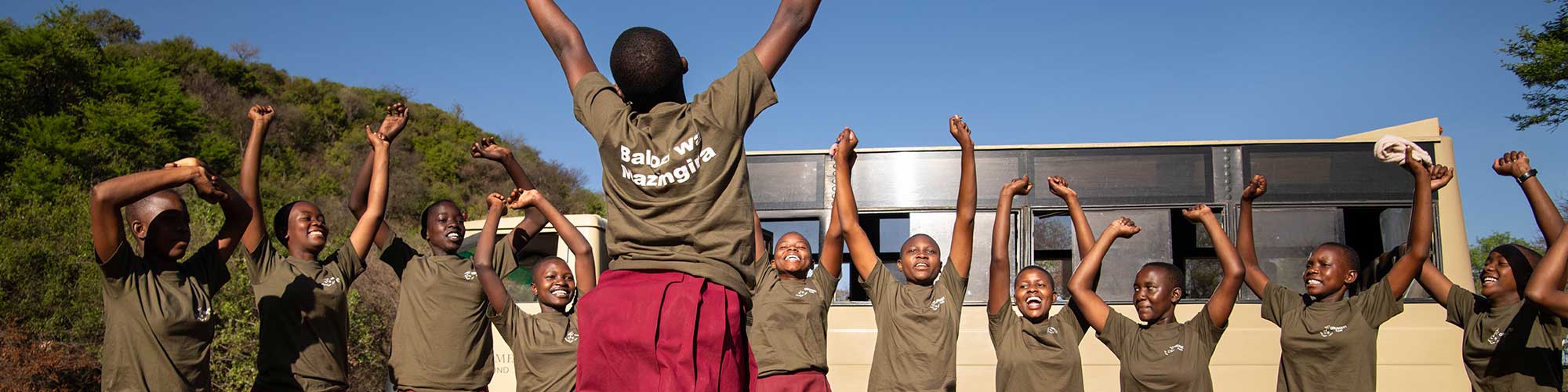
The programme combines education, enterprise development, women and girls’ empowerment, climate-resilient livelihoods, and environmental education, helping communities thrive alongside the Serengeti landscape. In 2025, Grumeti awarded 81 new scholarships and supported 220 total scholarships, with a 100% graduation rate among scholars. The Teaching Support Programme (TSP) placed 40 teaching fellows across 24 schools, reaching more than 17,000 students while reducing student–teacher ratios and strengthening STEM education.

Enterprise development is supported through programmes such as Village Learning and Village Guiding, which provide entrepreneurship training, financial literacy, and one-to-one mentoring. In 2025, 277 entrepreneurs from 10 villages participated, 28 new businesses were created, and 100% of mentorship participants maintained financial records.

Through the Climate-Resilient Livelihoods Programme (CLIP), farmers receive training in sustainable dairy production and livestock management, helping diversify incomes and reduce vulnerability to environmental shocks. In 2025, 50 cattle supported livelihoods across 10 villages, with expansion prioritising women farmers.

By linking conservation to tangible local opportunity, Grumeti demonstrates how thriving communities and healthy ecosystems can reinforce one another.

Key Areas

  • Scholarships and education support
  • Teaching Support Programme (TSP)
  • Village Learning & enterprise mentoring
  • Climate-Resilient Livelihoods (CLIP)
  • Women and girls’ empowerment

3. Innovation & Education

Advancing conservation through research, learning, and local leadership

Through RISE (Research & Innovation for the Serengeti Ecosystem), Grumeti is investing in the science, skills, and future leaders needed to protect the Serengeti for generations to come.

Founded in 2019, RISE translates applied research into practical conservation action while building scientific capacity among Tanzanian and international researchers. In 2025, the programme supported 12 graduate scholars, collaborated with 19 academic and non-academic institutions, delivered 7 specialist training programmes, and hosted seminars reaching more than 500 participants. Research contributed to scientific publications on elephant and giraffe populations, while 143,000 GPS fixes from elephant collars helped improve understanding of wildlife movement and habitat use.

RISE also develops future conservation leaders through specialist initiatives such as Women in the Field (WIF), supporting early-career Tanzanian women in science and conservation, and Conservation Education for Kids (CE4K), which introduced conservation learning to 469 primary students across seven schools using bilingual wildlife storybooks and teacher training.

Research programmes also include freshwater ecosystem monitoring, camera trap data analysis, GIS training, environmental DNA (eDNA), and pioneering work to monitor the critically endangered Southern Patas Monkey, helping ensure innovation directly strengthens conservation outcomes on the ground.

Key Areas

  • RISE applied conservation science
  • Women in the Field (WIF)
  • Conservation Education for Kids (CE4K)
  • Scientific research and training
  • Future conservation leadership

4. Relationships & Collaboration

Strengthening conservation through partnership, trust, and collaboration

Grumeti’s Relationships Department ensures conservation succeeds through strong partnerships with communities, government, and institutions across the western Serengeti.

Working closely with neighbouring villages, the team delivers awareness campaigns, human–wildlife conflict mitigation, stakeholder engagement, and collaborative conservation planning. In 2025, Grumeti reached more than 70,000 people across 24 villages through education campaigns focused on ecosystem conservation, wildlife protection, sustainable tourism, agriculture, and black rhino restoration.

The programme also operates a dedicated Human–Wildlife Conflict Mitigation Unit (HWCMU) and hotline, responding to conflict incidents involving elephants, lions, hyenas, and hippos. In 2025, the unit achieved a 100% response rate to reported incidents, trained 20 elephant task groups, distributed emergency first-aid kits, and supported pilot elephant mitigation fencing initiatives.

Relationships also extend beyond communities to national conservation partnerships. Grumeti works closely with TAWA, TANAPA, TAWIRI, government authorities, research institutions, and local leaders to strengthen conservation outcomes at landscape scale.

Key Areas

  • Community and government partnerships
  • Human–wildlife conflict mitigation
  • Awareness and behaviour change campaigns
  • Stakeholder engagement and collaboration
  • Landscape-scale conservation partnerships
Ranger monitoring protected area

350,000 acres
of protected Serengeti habitat

Wildebeest Migration

Secures a key migration route
for wildebeest and other species

Lion in the grass

Significant recovery
of wildlife populations

Community support

Long-term partnerships
with surrounding communities

Hi value and low impact tourism

High-value,
low-impact tourism supporting conservation

Technology Improvements

Science & Innovation
Guide conservation efforts

Partners

Implemented by Grumeti Fund in partnership with the Government of Tanzania and local communities. Philanthropy managed through ACCF.
Learn More at GrumetiFund.org

Your support will make an impact

Contribute to sustainable community and conservation projects in Africa.
This site uses cookies. By clicking ‘Accept’, you agree to the use of cookies. Cookie Policy
Accept
Reject
Cookie Settings
This site uses cookies. By clicking ‘Accept’, you agree to the use of cookies. Cookie Policy
Accept
Reject
Cookie Settings